Modular homes – why is it worth building?
Modular homes – why is it worth building a modular home?
A decade ago, many people, when they heard about modular construction, associated it with temporary structures or summer houses. However, the situation has changed rapidly. Today, modular solutions are becoming one of the most interesting alternatives to traditional construction, and their popularity is growing not only in Lithuania, but also throughout Europe.
More and more people are looking for housing that can be built faster, more cost-effectively, and avoids long and tedious construction processes. That is why modular homes are increasingly being chosen for both permanent residence and outdoor recreation or investment projects.

Modular homes – why is it worth building a modular home?
The speed of construction that changes the way we think about housing
One of the biggest advantages of modular homes is the short construction time. While the construction of a traditional home can take a year or even longer, modular technology allows most of the work to be done in the production workshop.
This means that the house structures are manufactured under controlled conditions, regardless of rain, frost or other weather conditions. Once the modules are ready, they are delivered to the site and installed in a very short time.
For this reason, modular homes become an attractive choice for people who want to move into a new home as quickly as possible and avoid lengthy construction processes.
Modern architecture and functionality
Some people still believe that modular homes look the same. However, today's designs completely disprove this myth.
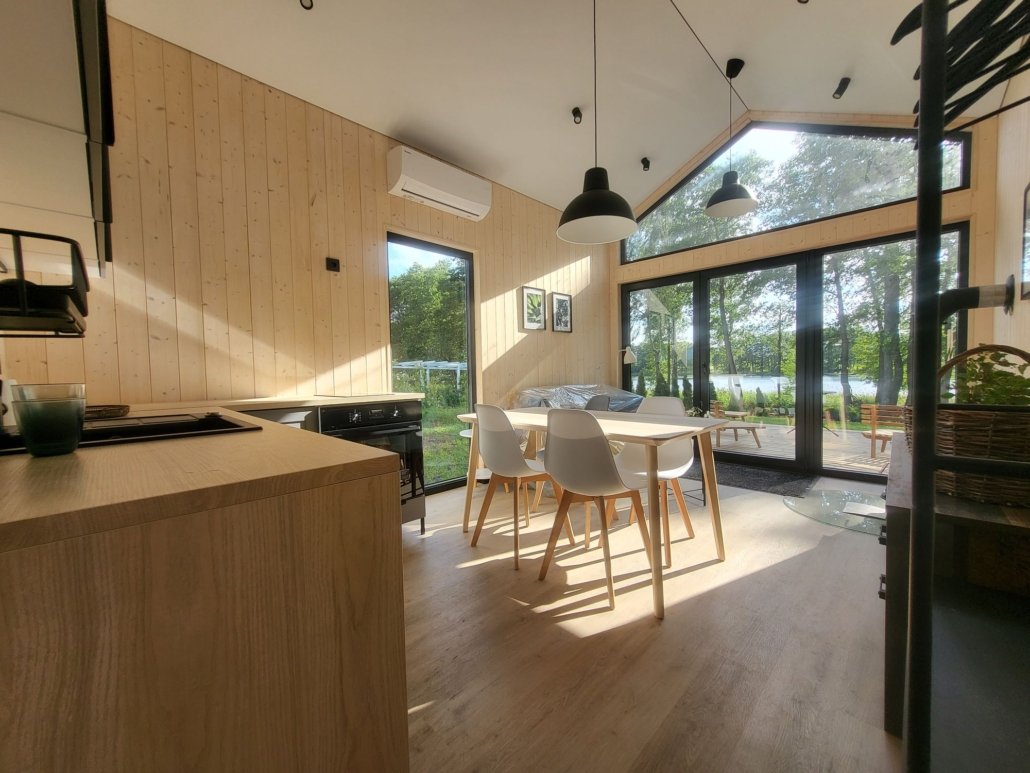
Architects create buildings of all shapes, sizes and styles. You can choose from minimalist Scandinavian design, modern architecture with panoramic windows or even custom solutions tailored to a specific plot.
Modern modular homes often feature large windows, plenty of natural light, and extremely well-planned spaces. Even a small area can provide comfort that is on par with much larger traditional homes.
Lower operating costs
In recent years, more and more attention has been paid to energy efficiency. Rising energy prices are encouraging people to look for cost-effective solutions that would reduce monthly costs.
Modern modular buildings are designed to maximize heat retention. High-quality insulation, airtight construction, and modern heating systems help reduce energy consumption.
For this reason, modular homes often become a more economical choice than older construction homes, which require high heating costs.
A great choice for a relaxing break in nature
In recent years, another trend has been observed - people are increasingly looking for an escape from the hustle and bustle of the city. Small houses by the lake, forest or river are becoming not only a place of rest, but also an investment in the quality of life.
Modular technologies allow for rapid implementation of such projects, even in remote areas. Due to the compact structures, transportation and installation are often easier than the construction of traditional structures.
It is no coincidence that modular homes are often chosen for rural tourism projects, recreation complexes, and short-term rental businesses.
An investment that can generate income
Short-term rentals are gaining more and more attention in the real estate market. People are looking for unique places to relax, and modern cottages surrounded by nature are becoming very popular.
Modular construction allows you to quickly create an attractive accommodation location and start operations much earlier than if you chose a traditional construction method.
Therefore, modular homes are of interest not only to families, but also to investors who value faster project payback and lower initial investments.
Flexibility as needs change
Life situations change. At one time, a compact home for two people was enough, but later on, more space may be needed for a family or a study.
Modular construction offers more flexibility than many people realize. Some projects can be expanded with additional modules, thus adapting the home to new needs.
This is especially true for young people who do not want to invest in a large house right away, but want to have the opportunity to expand it in the future.
Greater focus on sustainability
Sustainability is becoming a necessity rather than a fad. The construction sector is one of the largest environmental impacts, and there is increasing focus on resource efficiency.
The production process uses materials more precisely, waste is reduced, and the construction process itself becomes more controlled. This allows for more efficient use of resources and reduced environmental impact.
For these reasons, modular homes are often seen as a more modern and responsible approach to housing construction.
Why is this option becoming increasingly popular?
People today value more than just the appearance of a house. Speed of construction, operating costs, energy efficiency, and overall living comfort are becoming important.
Modular construction combines all these features into one solution. It allows for faster project implementation, more accurate budget planning, and avoids many of the challenges that often arise during traditional construction.
That's why modular homes from a niche product, it is becoming an increasingly visible and desirable housing alternative both in Lithuania and other European countries. More and more people are discovering that a modern house can be not only beautiful and comfortable, but also much easier to build than was previously customary.